What safety risks and legal rules should you know before becoming a site supervisor?
Being responsible on a construction site starts with knowing the safety risks and legal duties involved. Before taking on a supervisory role, you should be familiar with how to reduce hazards and protect your crew. Common risks include falls from height, machinery related injuries and exposure to harmful materials. These are not just site problems—they are legal obligations that must be managed.
UK site supervisors must follow the Construction Design and Management Regulations 2015 and Health and Safety Executive guidance. Your tasks may include leading toolbox talks and site induction sessions, and enforcing outcomes from risk assessments. Making sure workers use personal protective equipment correctly and checking access routes are daily priorities. Following these construction safety rules helps reduce injuries and protect your legal standing.
You are also responsible for promoting accident prevention strategies, ensuring hazard types are assessed properly and that safety briefings are recorded. Familiarity with HSE guidelines, understanding your site supervisor legal role, and staying alert to enforcement duties are fundamental to your role.
Here's What We Have Covered In This Article
How does daily documentation reduce stress and avoid disputes?
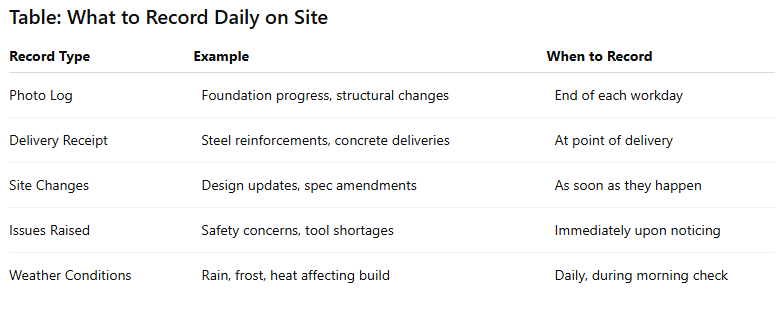
Keeping accurate site records every day protects your team and helps resolve issues. It provides a clear timeline of what happened and when. If something is questioned later, your records can speak for you.
Useful records include photo logs, daily work updates, delivery notes and changes to the build. Tools such as digital logbooks, spreadsheet trackers and request for information logs make the process smoother. If there is a disagreement, your logbook will help support your position with facts.
Daily records help manage claims, track milestones and avoid disputes. Using progress sheets, applying risk mitigation strategies and keeping detailed notes shows professionalism and ensures nothing important gets missed. This kind of record keeping reinforces your accountability protocols and can support stronger project tracking.
Pro Tip 1: Always bring both hardcopy and digital versions of your qualifications and ID to site inductions.
Why does communication matter so much for site supervisors?
Site supervisors keep everything moving by making sure everyone is on the same page. From contractors to clients, the way you share information makes a big difference.
Holding briefings, giving instructions clearly and making yourself available for questions all help the job flow. When something is not working, your ability to listen and respond calmly can make things better instead of worse.
You will work with people from all trades and backgrounds. Knowing how to read the room, spot problems early and manage them without tension will help keep things productive. Building a culture of respect starts with the way you communicate.
Strong leaders understand crew dynamics, maintain role clarity and follow an effective escalation path when challenges arise. These habits help improve team morale and site productivity.
Pro Tip 2: Invest in developing soft skills like communication and conflict resolution—these often set great supervisors apart from the rest.
How does technical knowledge help you lead more effectively?
People will look to you for guidance. If you know how the structure fits together, it is easier to lead with confidence.
You will be expected to read construction drawings, check technical details and identify when something does not match the plan. You also need to understand what happens first and which trades need space and time to do their work.
Spotting mistakes before they grow, understanding the snag list and thinking ahead about site planning are part of what makes a strong supervisor. The more familiar you are with the technical side, the more trust you earn. Your technical skills as a site supervisor will directly impact build quality and reduce costly errors.
For those looking to boost their technical and leadership capabilities, the Level 4 NVQ Diploma in Construction Site Supervision offered by MOS Training provides a recognised route into site management. It is ideal for experienced workers aiming to formalise their skills and move into supervisory roles.

Which certifications do you need to become a site supervisor?
Supervisors need qualifications that prove they know how to lead safely. Without the right cards and training, most sites will not let you through the gate.
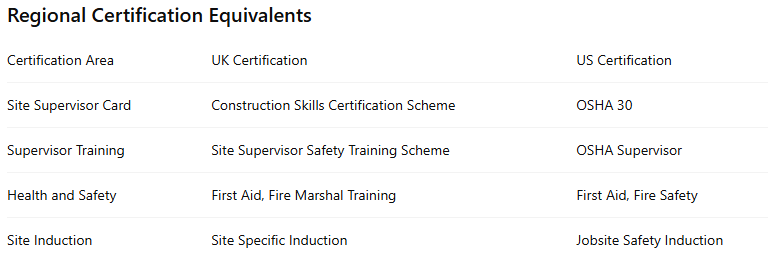
You will need a valid Construction Skills Certification Scheme card and Site Supervisor Safety Training Scheme training as a baseline. Most sites also expect a first aid certificate and full site induction. Extra training like Fire Marshal, Working at Height and Asbestos Awareness adds value and shows you are serious about safety.
Understanding the difference between SSSTS in the UK and OSHA 30 in the US is important if you work across regions. Keeping your certificates current shows you are ready and professional. Meeting UK site regulations ensures you are legally covered from day one.
At MOS Training, we offer practical and accredited qualifications for construction professionals across London and Essex. Whether you are just stepping into a supervisory role or ready to advance your career, our training is designed to help you succeed.
Site Supervisor FAQs
What does a site supervisor do?
A site supervisor oversees daily operations on a construction site. This includes managing safety, coordinating trades, ensuring quality control and maintaining compliance with health and safety regulations.
Do you need a CSCS card to supervise a construction site?
Yes. In the UK, a valid CSCS card is typically required to prove you are qualified to work on-site and carry out supervisory duties.
Is SSSTS the same as OSHA 30?
No. SSSTS is a UK based supervisor safety training, while OSHA 30 is used in the US. They serve similar purposes but are region specific.
What are the most important skills for a site supervisor?
Communication, technical knowledge, documentation accuracy and leadership are key. Understanding sequencing and reading technical documents are particularly valuable.
Start Your NVQ Today
Gain your site supervisor qualification without putting your career on hold.