

Do I Need the ECS or CSCS Card for My Trade?
If you work in UK construction or any electrotechnical field, you’ve probably asked yourself whether an ECS card or a CSCS card is right for your job. The answer depends on your trade, the qualifications you hold and the kind of tasks you do daily. Picking the wrong one can lead to site access problems or project delays. Here’s what you need to know to get it right the first time.
Here's What We Have Covered In This Article
Step 1: Understand What ECS and CSCS Cards Really Are and Why They Matter
What Is the ECS Card and Who Needs It?
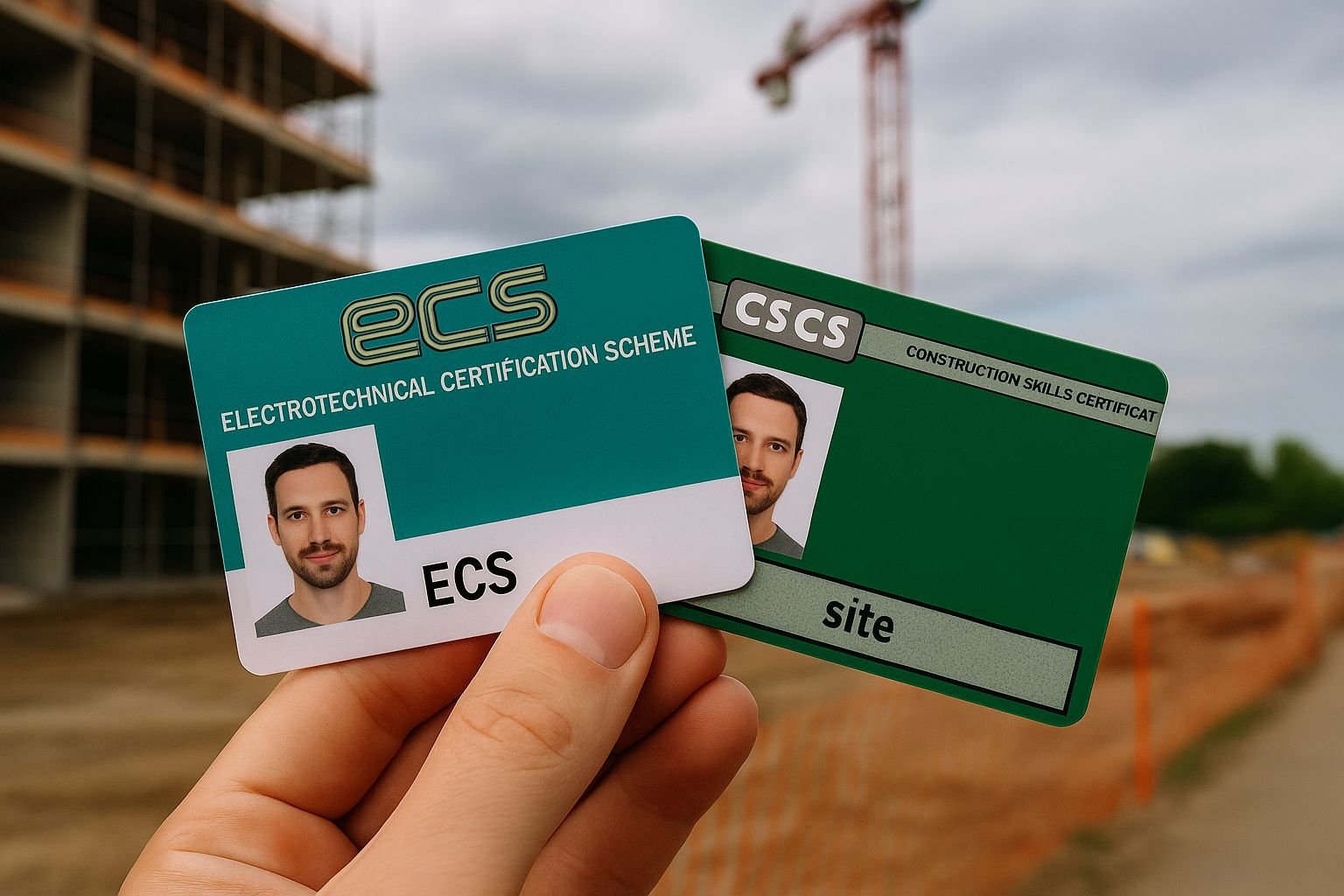
The Electrotechnical Certification Scheme card is issued by the Joint Industry Board. It confirms your qualifications in electrical or electrotechnical work, along with your knowledge of health and safety. This type of card is required for anyone working on or near electrical systems, including installations, maintenance, testing and structured cabling tasks.
What Does the CSCS Card Cover?
The Construction Skills Certification Scheme card is issued by the Construction Industry Training Board. It applies to a wider range of construction roles and shows that you have passed the Health Safety and Environment test and hold relevant recognised qualifications. This includes roles like site labourers, managers and supervisors.
Why Are These Cards Not Interchangeable?
The ECS card is linked directly to electrical competence and is aligned with industry frameworks used by electricians, data engineers and signal-based installers. The CSCS card is broader and intended for general construction roles. While some tasks may appear similar, using the wrong card can lead to delays or site entry refusal. Low-voltage and data work should be backed by an ECS card, even on sites that predominantly use the CSCS scheme.
Pro Tip 1: Start your ECS or CSCS application at least 4 weeks before your project begins. Delays are common, especially if documents are missing or unclear.
Step 2: What Card Should You Have for Your Construction Job?
Match Your Certification to Your Job Role
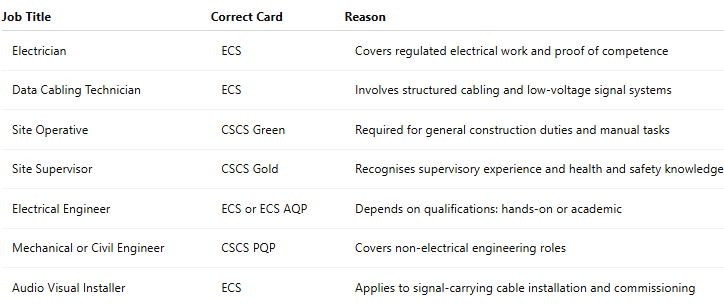
Choosing a card by job title alone often leads to confusion. Your daily responsibilities and the type of systems you work with matter far more. This table helps match the correct certification to typical job roles:
Handling Overlapping Roles
If your role blends electrical and general duties, consider which card aligns with the core work you do most often. For example, an engineer setting up a comms cabinet should be ECS certified, while a general labourer assisting with groundwork would need a CSCS Green Card. Use the guidance from the official CSCS card finder or ECS card finder to double-check.

Pro Tip 2: Use CPD logging to stay ahead of changing regulations and make your profile stand out during subcontractor selection.
Step 3: Can You Hold Both ECS and CSCS Cards?
Why Some Workers Carry Both Cards
Carrying both cards is useful in certain cases, especially when your responsibilities cross into both schemes. If you work across multiple project types, switch between subcontractors or support multiple trades on site, having both cards may be the simplest way to avoid site access issues.
How Smart Check and ECS Check Work
Both CSCS Smart Check and ECS Check allow employers and site gatekeepers to validate your card digitally. However, they do not sync with each other. If you only hold one card and the site only uses the other scheme’s validation system, access could be denied even if you are fully qualified.
Prepare by confirming which card the site uses before arrival. Keep a digital copy of your card on your phone using the relevant app. In disputes, site managers often rely on quick scanning tools over manual verification.
You can use the ECS Check tool to prove electrotechnical qualifications or visit the CSCS Smart Check site to confirm general construction access.
Step 4: How Do You Apply for an ECS or CSCS Card Based on Your Role?
Choose the Right Card for Your Experience
Each card type is tailored to a different level of skill and experience:
-
ECS Apprentice or Trainee card is ideal for those just entering the trade
-
ECS Gold Card is recognised industry-wide for qualified electricians
-
ECS AQP Card suits academically qualified individuals without practical NVQs
-
CSCS Green Card is appropriate for general labourers
-
CSCS Gold Supervisor and Black Manager cards confirm advanced site roles
Requirements typically include NVQ Level 2 or 3, recent HS&E pass, proof of qualifications and sometimes employer sign-off.
Where to Apply and What to Prepare
Use the MyECS portal for ECS cards and the CSCS online service for CSCS applications. Make sure your documents are accurate and recent. Keep a PDF copy saved on your phone or cloud drive.
When Should You Renew Your Card?
Most cards are valid for three to five years. Check your expiry date and set a reminder in advance. Delays in renewal can lead to project disruption or failed site checks. When renewing, confirm if your qualifications still match the latest criteria as they may have changed.
Step 5: How Does Your Card Help Build Your Trade Career?
Professional Recognition Through ECS and CSCS
Your ECS or CSCS card is a formal recognition of your training, compliance and ongoing safety awareness. For example, holding the ECS Gold Card can support your application for Institution of Engineering and Technology (IET) membership and boost credibility when applying for senior technical roles.
Some site managers also use smart validation tools as part of subcontractor selection. Having your card correctly registered in ECS Check or CSCS Smart Check ensures you can be verified instantly without paperwork.
Keep Track of CPD and Build Your Skills Record
ECS account holders can log Continuing Professional Development activities through their dashboard. This includes refresher training, toolbox talks, safety briefings and new certifications. Keeping a CPD record helps show your commitment to safe and up-to-date work practices.
Smart card systems make this data more visible than ever. A complete and updated profile strengthens your professional image in competitive project bids and multi-contractor environments.
Current Issues and New Developments with ECS and CSCS Cards
ECS Card Processing Delays
The ECS currently reports a processing time of around two to three weeks for new applications. Delays often happen when certificates are missing or incorrectly uploaded. To avoid issues, apply early and ensure every document is legible and in the correct format. Using the MyECS Portal applicants can track their progress and receive status updates in real time.
Growing Demand for Low Carbon and Green Skills
With the UK targeting net zero carbon emissions by 2050, the demand for skills in low carbon systems is increasing. Electricians trained in energy-efficient systems, EV charging infrastructure and heat pump installations can enhance their profile using the ECS card system. By logging CPD focused on green technologies, cardholders can show employers they are ready for the future of building services.
Real-Time Certificate Checks Improve Trust
ECS now uses automatic links with awarding bodies to verify certificates in real time. This means faster approvals and fewer manual checks. It also builds employer trust by removing ambiguity around qualifications and helps reduce the risk of fraud.
Flexible and Accessible HSE Testing
The ECS Health and Safety test can now be taken online, allowing for more flexibility. This is helpful for workers with changing shift patterns. ECS also supports accessibility features like text-to-speech for users who need assistive technology. You just need to request it when setting up your test.
ECS in Scotland: Use the Right Portal
If you work in Scotland, your card application must go through the Scottish Joint Industry Board rather than the ECS website. This ensures your certification aligns with region-specific frameworks used in Scotland.
Final Thoughts
Choosing the right card is not just a box to tick for site access. It’s a practical step that shows your trade credentials, helps avoid issues with entry checks and supports your career growth in the long run. Whether you work in electrical installation, data systems or general construction, matching your card to your actual job role can make a real difference. With the right knowledge and a bit of planning, you’ll be ready for any site, contract or project that comes your way.
Need Help Getting Your ECS or CSCS Card?
Avoid delays and paperwork stress. We help you apply, renew, and get it right first time.
