What is the EAL Level 3 Electrical Course and Why Should You Consider It?
The EAL Level 3 Electrical qualification is a recognised vocational training route for those in the UK wanting to become qualified electricians or develop further in the electrical trade. It combines applied knowledge with technical skills to meet the current standards set out in the IET Wiring Regulations. Whether you’re entering the field for the first time or adding formal certification to your experience, this course gives you a direct route into employment, self-employment or further professional development.
Here's What We Have Covered In This Article
Introduction and Accreditation
Overview of EAL (Excellence, Achievement and Learning)
EAL is an Ofqual-regulated awarding body focused on engineering and building services qualifications. Their credentials are known for aligning with employer expectations and national occupational standards. An EAL Level 3 course offers a practical route that reflects day-to-day tasks found in the workplace.
Why Is the EAL Level 3 Electrical Qualification Valuable?
This certification helps learners gain access to employment in sectors like housing, commercial installation, and industrial maintenance. It also supports registration with NAPIT or NICEIC for self-certifying electrical work. Many employers in the electrical contracting and building services sectors recognise EAL as a standard for site-readiness.
Who Is the Course Aimed At?
The programme suits school leavers, adult learners retraining from another field and professionals currently working without formal accreditation. Learners in roles such as electrical mate, assistant or improver can benefit from this course to increase their status and income.
How EAL Accreditation Aligns with Industry Standards
The EAL Level 3 Diploma is regularly updated to meet changes in the IET Wiring Regulations (BS 7671). This ensures learners are prepared to meet statutory requirements and workplace safety protocols from the start.
How Do Employers View EAL Graduates?
Employers value the hands-on nature of EAL courses. Candidates learn in settings that reflect real-world electrical installation scenarios, including cable containment systems, consumer unit configuration and circuit fault diagnosis.
Is There a Difference Between EAL and City and Guilds?
Both awarding organisations are recognised by industry. However, EAL tends to offer more contextual assessments that mirror workplace practices, whereas City and Guilds can be more traditional in assessment style.
Pro Tip 1: Use free online tools like Sparky Ninja or Learning Lounge to reinforce theory topics and prepare for technical questions in assessments.
Course Structure, Key Topics and Training
What Will You Study in the EAL Level 3 Electrical Course?
Modules include both core units and optional pathways. Mandatory topics include health and safety, design and installation theory, testing procedures and electrical science. Optional units may focus on solar PV, environmental technology systems or enhanced fault diagnostics.
How Long Is the Course?
Learners usually complete the course within a year to eighteen months depending on delivery format. Around 600 guided learning hours are required, with an overall qualification time exceeding 1,000 hours. The time fluctuates depending on the student and which EAL course you select.
Key Learning Areas
Workplace Health and Safety Compliance
Covers risk assessments, method statements, control measures, safe isolation and PPE. Learners are trained to comply with regulations including the Electricity at Work Regulations 1989.
Electrical Principles and Theory
Topics include alternating current, direct current, Ohm’s Law, power factor, resistance and voltage drop. These are taught alongside circuit design and load balancing for safe installation planning.
Electrical Installation Design
You’ll learn about installation layout, earthing systems, consumer unit arrangement, cable sizing and zoning. These are all directly linked to BS 7671 requirements.
Inspection, Testing and Certification
Practical and theoretical elements include safe isolation procedures, R1 and R2 testing, insulation resistance, continuity testing and the completion of Electrical Installation Certificates (EICs).
Fault Diagnosis and Rectification
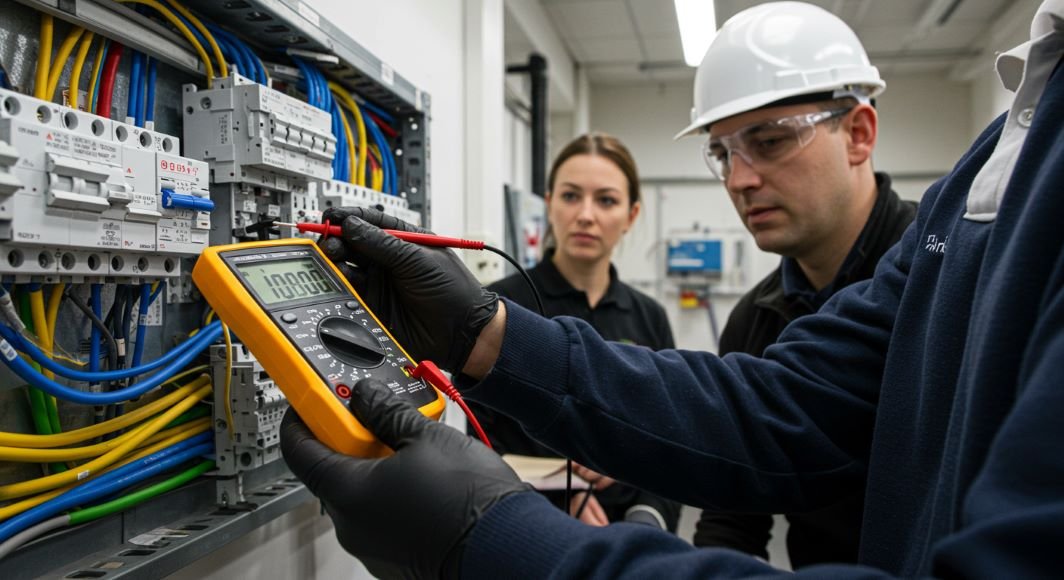
Learners are taught how to trace open circuits, short circuits, earth faults, neutral-to-earth faults and overcurrent protection problems. Multimeter use and documentation of findings are covered.
Where Does Training Take Place?
Most training centres simulate site environments. You’ll work on three-phase boards, radial and ring circuits, lighting installations and data cabling to prepare for workplace tasks.
Technical Equipment Training
Students gain competence using voltage indicators, continuity testers, insulation resistance testers, RCD testers, distribution boards, circuit breakers and conduit systems.
Practice Through Simulation
Centres provide fault boards and mock environments. Learners carry out tasks such as installing switched fused spurs, upgrading circuit protection or configuring lighting arrangements.
Pro Tip 2: Keep your learner portfolio updated weekly so that practical achievements align with assessment requirements and are easy to submit on time.
Assessment, Eligibility and Learning Modes
What Types of Assessment Are Used?
- Closed book written exams
- Direct observation of practical tasks
- Submission of a work-based portfolio
- Online multiple choice assessments depending on provider
Assessments follow qualification-specific grading criteria and are carried out by qualified assessors at EAL-approved centres.
Who Can Apply for This Qualification?
Applicants typically need to be 16 or older. While some centres require GCSEs or a Level 2 Electrical qualification, relevant work experience may also be considered. Functional skills in English and maths are important for understanding safety documents and performing calculations.
What Study Options Are Available?
EAL Level 3 Electrical courses are offered across the UK at further education colleges and private training providers. Options include:
- Full-time daytime courses
- Part-time evening courses
- Apprenticeship formats combining work with study
- Blended learning with centre-based practical assessments
For details about training venues, visit EAL’s centre directory.

What Jobs Can You Get with an EAL Level 3 Electrical Qualification?
An EAL Level 3 qualification allows you to work in roles such as:
- Electrical installer for domestic or commercial properties
- Maintenance technician
- Inspection and testing engineer
- EV charge point installer
- Solar PV installation technician
- Facilities management technician
Some learners progress directly into self-employed contracting, applying for Part P registration or joining a Competent Person Scheme.
Can You Move On to Higher Levels?
Yes. Graduates can progress to:
- NVQ Level 3 Electrical Installation (for ECS Gold Card)
- Level 4 Electrical Engineering qualifications
- Higher National Diplomas (HNDs)
- Renewable energy technology courses
These options support advancement into technical design, electrical consultancy or project supervision.
What’s the Demand Like for Qualified Electricians?
The UK currently faces a shortfall in qualified electricians. Data from the Electrotechnical Skills Partnership shows a growing need in domestic housing, infrastructure upgrades and green energy installations.
What Salary Can You Expect?
- Entry level: £23,000 to £28,000
- Qualified: £30,000 to £38,000
- Experienced or self-employed: £40,000 and above
Rates vary by region and sector. Working in London, on commercial projects or in renewable technologies often leads to higher earnings.
Why Employers Prefer EAL Graduates
Because the course mirrors real installations, EAL-qualified electricians are often seen as better prepared for on-site work. This leads to faster onboarding and fewer training gaps for employers.
Support, Comparisons and Tips for Success
Is EAL Better Than Other Training Routes?
EAL and City and Guilds both produce strong electricians. However, EAL’s practical-heavy model and structured assessments often appeal more to learners seeking hands-on roles in installation, testing and maintenance.
What Support Resources Are Offered?
Learners benefit from:
- Tutor-led revision sessions
- Digital workbooks and test preparation platforms
- Access to mock assessment environments
- Industry-led webinars and peer forums
Many providers also give career advice, support with CV writing and help registering with the ECS or a competent person scheme.
Can You Get Help with Course Costs?
Eligible learners may receive support through:
- Advanced Learner Loans via gov.uk
- Adult skills funding through local authorities
- Employer sponsorship for upskilling employees
Speak to your local provider about instalment options or financial support before enrolling.
How to Succeed in EAL Level 3
- Practise safe isolation and testing regularly
- Keep detailed records in your learner portfolio
- Watch training videos to reinforce installation sequences
- Don’t hesitate to ask for clarification in technical sessions
Final Thoughts
The EAL Level 3 Electrical qualification route gives you a straightforward route into one of the UK’s most in-demand trades. With its mix of practical skills, industry-aligned theory and broad employment options, it prepares you for success whether you’re looking for a job or planning to work independently.
Frequently Asked Questions
What is the difference between EAL and City and Guilds for electrical qualifications?
EAL and City and Guilds are both nationally recognised awarding bodies in the UK. EAL focuses more on job-site performance and practical assessments, whereas City and Guilds often follows a more academic model. Employers tend to choose candidates based on experience and applied skills rather than the awarding body.
Can I use the EAL Level 3 Diploma to get an ECS Gold Card?
Yes, but only if you complete the full NVQ Level 3 qualification which includes on-site evidence of competence. The EAL Level 3 Diploma is often used as a stepping stone toward the NVQ and the Electrotechnical Certification Scheme (ECS) Gold Card.
How does EAL support renewable energy qualifications like battery storage or solar PV?
EAL is actively developing and delivering new qualifications that cover solar photovoltaic systems, battery storage installations, and electric vehicle charge points, aligning with the UK’s shift towards cleaner energy.
Can I study the EAL Level 3 course while working full time?
Many centres offer evening and part-time study options that allow you to continue working while gaining your qualification. Some even support blended or distance learning formats for theory units, with on-site practical assessments.
What tools will I learn to use during an EAL Level 3 Electrical course?
You’ll become familiar with insulation resistance testers, multimeters, RCD testers, voltage indicators, cable strippers and test lead kits. Training also includes safe isolation procedures and certification tasks using IET-aligned documentation.
Additional Differentiators and Enhancements to Add
1. Battery Storage and Renewable Tech Integration
There is growing demand for electricians qualified in battery storage systems and renewable installations like PV solar. EAL is now incorporating forward-facing units tied to emerging energy infrastructure, which makes their courses more adaptable to government green initiatives.
2. Collaborations with The Electrotechnical Skills Partnership (TESP)
EAL works closely with TESP and NET (National Electrotechnical Training), making the qualification process more aligned with national apprenticeship standards. This adds weight to its credibility and ensures consistency across centres.
3. Shift Toward Flexibly Delivered Apprenticeships
New apprenticeship frameworks led by EAL allow learners to combine on-site experience with more modular and adaptive learning routes. This is especially beneficial for adult learners or those reskilling.
4. Distinct Focus on Performance Evidence
EAL’s approach to qualification differs by focusing heavily on observable, task-based evidence collected during live or simulated activities. This method is more accurate in confirming true competence, as opposed to theory-heavy exam routes
Book Your EAL Training Assessment
Ready to get started? Let’s find the right EAL course and provider near you.