What does the EAL Level 3 Electrical Qualification actually cover?
The EAL Level 3 electrical qualification is a regulated technical certificate at RQF Level 3, roughly equal to A Levels in the UK. It confirms that you have the knowledge and practical skills to carry out safe, compliant electrical work in domestic settings. It’s especially useful if you want to move into EV charging, electrical inspection or join a Competent Person Scheme like NICEIC or NAPIT.
This regulated electrician training course includes installation methods, electrical science, testing techniques, fault finding and how to comply with Part P of the Building Regulations. This qualification is not the same as an NVQ or informal course. It follows a classroom based structure with a mix of exams and practical assessments.
EAL is the awarding organisation, and this course sits on the Regulated Qualifications Framework overseen by Ofqual. It is recognised by employers and industry bodies across the UK as part of the UK qualification framework for regulated electrician training.
Here's What We Have Covered In This Article
What will you learn about EV charging and electrical testing?
This course includes two of the most practical and job relevant skills: installing electric vehicle charge points and carrying out electrical inspection and testing.
The EV charging section covers: Installing Mode 3 and smart charge points, including mode 3 socket outlets and smart charge control systems Load calculation, RCD type selection and PEN fault detection Working to the IET Code of Practice for EV charging DNO notification and following Part P requirements
In the testing and inspection section, you’ll learn: Dead testing methods like insulation resistance, continuity and polarity checks Live testing methods including earth fault loop impedance, prospective fault current and RCD verification Using multifunction test instruments such as the MFT1720 or Di Log 9083 Completing test records, test schedule documentation, installation certificates and inspection reports accurately
You’ll also build confidence by learning how to test in the right sequence, avoid common errors and keep accurate records. These modules link directly to real world work like EV charger installations, EICRs and fault finding jobs.
Pro Tip 1: Bring your own multifunction tester to class so you’re comfortable using it on real jobs.
EAL vs City and Guilds vs NVQ: What’s the difference and which is best?
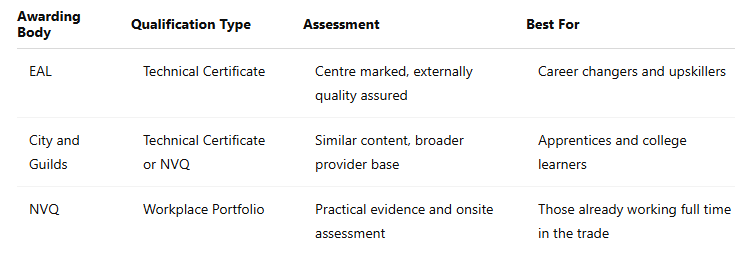
EAL and City and Guilds both offer regulated electrical qualifications. The key difference is often in delivery and format, not content. Both are recognised by Ofqual, NAPIT and NICEIC.
The belief that City and Guilds is preferred by employers is outdated. Both EAL and City and Guilds qualifications are listed on the RQF and meet the same national standard.
EAL tends to suit learners who want a structured, tutor led option without the need for onsite evidence collection.
Qualification Comparison Table
Pro Tip 2: Log every installation you do post-course – it makes scheme applications much easier.
Is this the right qualification for your career stage?
This course works well for: People changing careers who want a recognised route into electrical work Tradespeople who need a formal qualification to progress Apprentices who want to build on their NVQ with extra skills
You don’t need to be highly technical to begin. If you’ve got some basic maths and logical thinking, you’ll be fine. Training centres like MOS Training Centre will help you work out if this is the right fit before you sign up.
This course provides a solid foundation if you’re aiming to install EV chargers, carry out testing or move into certification work.
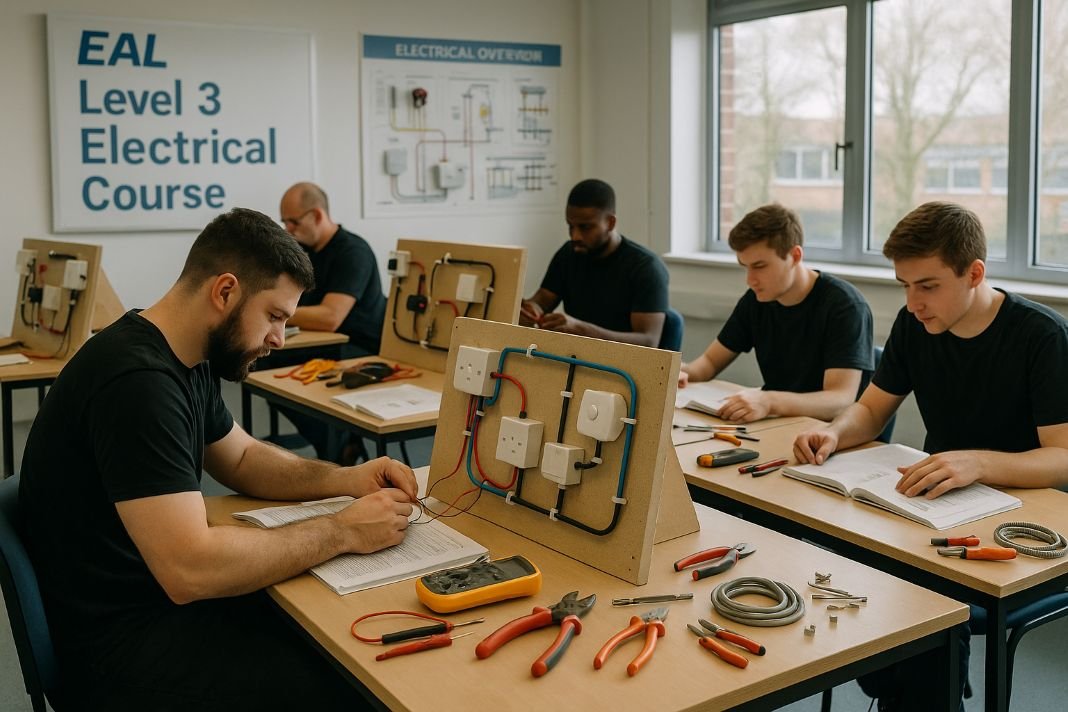
An AI photo of MOS Training Centre in Essex – Electrical Training Courses
What will your training actually look like week to week?
Courses are usually delivered either: Full time across two weeks Part time over weekends across six to eight weeks
At MOS Training Centre, you’ll get: Classroom sessions covering electrical principles, regulations and circuit design in line with BS 7671 and the IET Wiring Regulations Practice using wiring boards to install and fault find ring and radial circuits Step by step testing on mock installations using industry tools
Assessments include: Multiple choice exams (open book) Practical assessments on training rigs Written worksheets and assignments
MOS also provides: Tutor support throughout the course Printed revision materials Mock tests to prepare for final assessments
What tools and equipment will you train with?
As part of your hands on training, you’ll become familiar with a full range of industry standard electrical tools and testers. These include:
Multifunction testers (MFTs), such as the Di Log 9083 and MFT1720 Insulation resistance testers RCD testers and earth fault loop impedance meters Socket testers, clamp meters and continuity testers Cable strippers, cutters, screwdrivers and circuit finders
You’ll work with these on real training boards that simulate domestic and EV installations, so you’ll get to apply what you learn in a realistic setting.
Ready to Install EV Chargers Legally?
Get the qualification that opens doors to paid installs and scheme registration.
What jobs or work can you do after completing EAL Level 3?
This qualification opens up several job routes, including: Registering with NICEIC or NAPIT as a domestic installer Installing EV chargers as a qualified contractor Carrying out condition reports and testing work (EICRs) Joining teams focused on remedials, rewires or landlord safety checks Adding this qualification towards a Gold ECS Card alongside an NVQ, recognised by the JIB electrician grading scheme
There’s strong demand for electricians who are fully qualified to test, install and certify. With this course, you’re meeting the technical standard needed by major industry schemes.
This is also a stepping stone for becoming a self employed contractor offering domestic installation or EV services.
What progression options are available after this course?
After completing your EAL Level 3, many learners continue developing their career and qualifications. Some of the next steps include:
Completing an NVQ Level 3 portfolio to apply for the Gold ECS Card Taking the AM2 or AM2E practical assessment for full electrician status Enrolling in additional short courses such as 18th Edition, PAT Testing or Smart Home Installation
These additional routes help boost your employability and broaden your scope of work within the industry.
Does EAL Level 3 help you join NAPIT or get Part P registered?
Yes. NAPIT, NICEIC and other schemes accept this qualification.
To apply, you’ll need: A valid EAL Level 3 certificate Proof that you’ve completed installation work A successful on site assessment or application review
To register for EV work, you also need to: Notify the DNO after each install Use equipment that complies with BS EN 61851 Follow the IET EV Charging Code of Practice
MOS Training Centre will support you through each step, from application forms to scheme compliance.
You can also read more about the full Part P registration process or how to join a Competent Person Scheme to understand the requirements beyond training.
How much does it cost and is the course worth it?
Most centres charge between £1,500 and £2,200 for this course, depending on format and location.
MOS Training Centre offers: Upfront pricing with no hidden fees Flexible payment plans Support for accessing CITB grants or employer funding
If you’re looking into electrical course funding in the UK, this course may be eligible for support schemes depending on your employment status.
You’ll typically earn back your training cost in just a few jobs. One EV charger install can bring in up to £800. If you add testing and inspection services, the earning potential rises quickly.
This makes the course a smart option if you want to increase your work opportunities or start a new career in electrics.
FAQs: Real answers to the most confusing questions about EAL Level 3
Is the EAL Level 3 course mainly theory or practical?
You’ll learn the theory, then use tools and test boards to apply what you’ve been taught. There’s a balance between both.
Can I install EV chargers straight after passing?
Yes, as long as you notify the DNO, use compliant gear and follow scheme rules. Most learners begin with domestic installs.
Can I work for myself after this course?
Yes, once you register with a Competent Person Scheme. You’ll need to meet their criteria, but this qualification is part of that pathway.
Do employers accept EAL?
Yes. EAL is regulated by Ofqual and widely used by training centres across the UK. It’s accepted by major schemes.
How difficult is the assessment?
It’s challenging in places, but well supported. With revision packs and tutor guidance, most learners pass without issues.
To check your suitability or ask questions, get in touch with MOS Training Centre for clear guidance and next steps.