How does a labourer become a qualified tradesperson on a construction site?
A labourer usually moves into a skilled trade by building site experience, choosing a clear trade path, and gaining the right qualification for that role. In UK construction, that often means a National Vocational Qualification, or NVQ, for site trades, or a City & Guilds or EAL route for electrical work. Formal qualifications matter because most skilled roles, card upgrades, and long-term progression depend on recognised proof of competence, not experience alone.
Here's What We Have Covered In This Article
Who this route is for
Plenty of people ask this question from very different starting points. Some are new to site work and want a proper trade. Others have spent years assisting skilled workers and now want their own qualification, better rates, and wider job options.
The right route depends on what you already do on site, how much evidence you can show, and whether you want to stay in general construction or move into a specialist area such as electrical installation.
- A new entrant usually needs to pick a trade first, then train at the level that matches an entry role. That might include plastering, roofing, steel fixing, decorative finishing, cladding, formwork, or another site trade.
- An experienced worker with no formal qualification often fits an experienced worker or fast-track NVQ route, which means that existing skills are assessed through on-site evidence instead of starting from scratch.
- A career changer may need a more structured learning route, especially if moving into electrical work where technical study, practical assessment, and exams are a standard part of progression.
- A supervisor or employer may look at qualifications from a different angle, including card requirements, workforce compliance, or the next step into supervisory and management roles.
Electrical work sits slightly apart from many construction trades. If your target is electrician status, JIB grading, or domestic and commercial installation work, the route usually involves City & Guilds or EAL qualifications and a more exam-based structure than most construction NVQs.
Pro Tip 1: If seeking electrical qualifications, check that your chosen course covers the latest wiring regulations and necessary assessments.
Comparing your options
Once you know where you are starting from, the next task is choosing the right qualification route. Construction and electrical pathways lead to different jobs, different assessments, and different forms of recognition on site.
Construction NVQs
An NVQ is a work-based qualification assessed through real site activity. For a labourer moving into a trade, Level 2 is often the first proper trade qualification, although the exact level depends on the role.
Level 2 NVQs cover many hands-on occupations, including plastering, roofing occupations, fitted interiors, building maintenance, demolition, external render, thermal insulation, steel fixing, stonemasonry, and construction and civil engineering operations. If you already carry out that work on site, a fast-track route may be possible because the assessment is based on what you can already do.
Level 3 and above usually suit people stepping into supervision, specialist responsibility, or health and safety roles. ProQual is one of the awarding bodies used for several construction NVQs, alongside other recognised awarding organisations.
Electrical qualifications
Electrical work follows a different path because employers and the wider industry expect specific technical knowledge as well as practical ability. City & Guilds qualifications are a common route here, and EAL also covers specialist areas.
A learner aiming to become an electrician may look at the Level 3 Technical Occupational Entry in Electrical Installations for structured entry learning, the Level 3 NVQ Diploma in Electrotechnical Technology for workplace competence, or the Experienced Worker Qualification if they already have years of relevant electrical experience. The 18th Edition, which is the common name for BS 7671:2018, is often needed to show knowledge of the wiring regulations. Inspection and testing, often called 2391, becomes relevant later for those whose role includes verification and certification work.
Choose the route that matches the job
A labourer who wants to become a dryliner, roofer, steel fixer, or plasterer usually needs a construction NVQ linked to that trade. A labourer who wants to become an electrician needs an electrical qualification route instead, with technical study and centre-based exams forming part of the process.
MOS Training Centre delivers construction NVQs across the UK through on-site assessment and runs electrical training and exams from its Loughton centre in Essex. That distinction matters because construction learners often continue working on site during assessment, whereas electrical learners usually need both workplace development and formal testing.
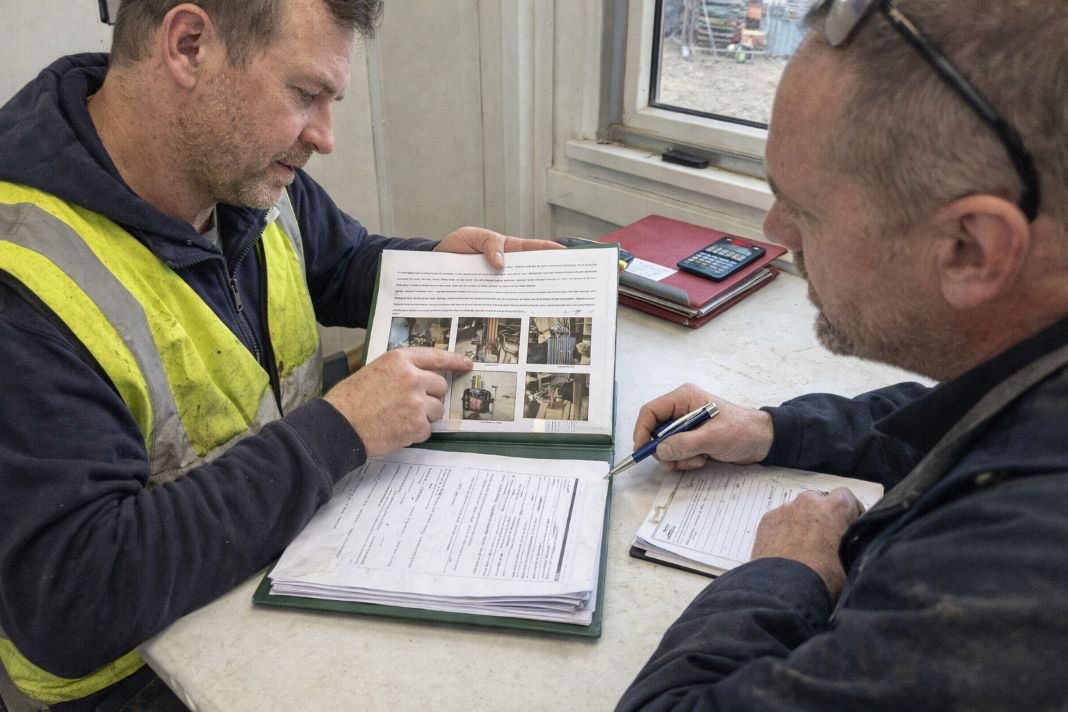
AI image of workers on-site
Pro Tip 2: Keep a detailed portfolio of your work, including photos and site records, to streamline your NVQ assessment process.
What is involved in qualifying?
The move into a trade feels much easier once the process is broken down into stages. The work involved depends on the route, but the broad pattern is usually straightforward.
- Pick the exact occupation you want to qualify in. “Construction” is too broad on its own. The qualification must match the work you actually do, such as plastering, cladding, building maintenance, or electrical installation.
- Check the level and entry point. Experienced workers may go straight into an NVQ based on current competence. New entrants may need training first before workplace assessment makes sense.
- Gather evidence. For an NVQ, that usually includes site photos, method statements, job records, witness testimony, and assessor observations. A portfolio of evidence shows that you can perform the trade to the required standard in real working conditions.
- Complete the assessment. Construction NVQs are commonly assessed on site, which allows you to qualify while working. Electrical qualifications often include practical tasks, written exams, and assessment at an exam centre.
- Use the completed qualification for the next step, which may include a skilled worker card, a move into a new role, or further progression into supervision.
For experienced site workers, the main adjustment is usually evidence. Many people can do the work well but have never kept records of it. An assessor can guide the type of proof needed, but the learner still has to show current, relevant work.
Electrical routes involve more formal study. The 18th Edition is exam based, and 2391 includes inspection, testing, and a higher level of technical understanding. A learner based in London or Essex may attend an exam centre in Loughton for that part of the route, whereas an NVQ candidate in construction is more likely to be assessed at their own workplace.
Timeframes vary. A fast-track trade NVQ can move quicker if your evidence is ready and your work matches the qualification closely. A new entrant route into electrical installation takes longer because technical learning and workplace competence both need to be built up over time. Cost varies too, with construction Level 2 NVQs from £650, Level 3 NVQs at £980, Level 4 NVQs at £1,190, and Level 6 NVQs at £1,500. On the electrical side, the 18th Edition is £392, the Experienced Worker Qualification is £1,600, the 2357 NVQ is £1,600, the 2391 is £1,200, and the 2366 route is £2,560.
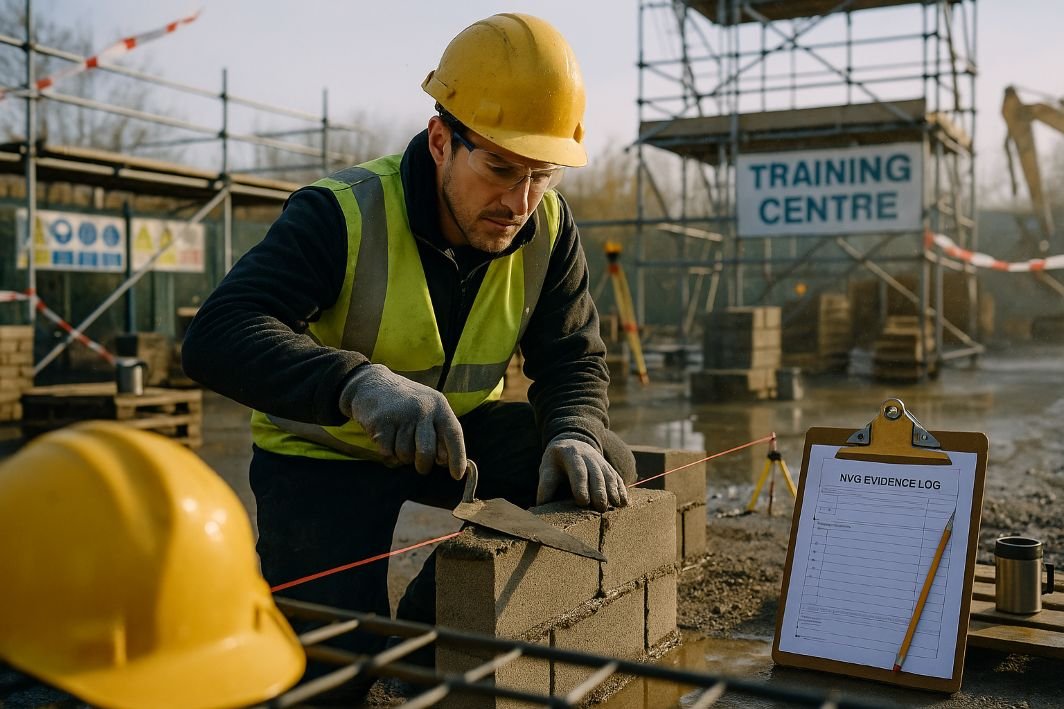
AI image of work on site
Outcomes: what qualifications lead to
A qualification should open a specific door. For most people, the immediate gain is access to better roles and the ability to prove skilled status properly.
Construction NVQs often link directly to a CSCS Card, which is the Construction Skills Certification Scheme card used on many UK sites. Card requirements can vary by employer and contract, but a relevant NVQ is commonly needed for skilled worker, supervisor, or manager card applications.
A few typical examples show how this works:
- A Level 2 trade NVQ can support progression from labouring into a recognised skilled trade role and may align with a skilled worker CSCS card application.
- A Level 3 or Level 4 qualification may suit someone moving into supervision, including occupational work supervision or site supervision roles.
- A Level 6 or Level 7 NVQ can support movement into site management, senior inspection, contracting operations, health and safety practice, or senior management positions.
- Electrical qualifications can support progression toward JIB recognition, broader job eligibility, and more specialist responsibilities, particularly once core installation competence is backed by the right regulations and testing qualifications.
Pay progression is never automatic, and no course can guarantee a specific wage. Even so, skilled workers with recognised qualifications are generally in a stronger position when applying for jobs, negotiating rates, or meeting subcontractor and principal contractor requirements. A qualified plasterer, roofer, or electrician can usually access opportunities that stay out of reach for a general labourer.
Common pitfalls and misconceptions
The biggest problems usually come from assumptions made too early. A poor course choice or the wrong qualification level can waste both time and money.
- Some workers assume that years on site count as full proof of competence. Experience matters, yet most employers and card schemes still expect a recognised qualification for skilled roles.
- Others choose a qualification that does not match their real work. A worker who mainly carries out drylining support tasks, for example, should not rush into a qualification for a trade they do not perform independently.
- Many learners underestimate the evidence needed for an on-site NVQ. If your phone contains no work photos, your records are incomplete, and no one can confirm your responsibilities, the assessment can slow down.
- CSCS card rules are often misunderstood. A card does not replace a qualification, and expiry dates, occupation wording, and route changes can all affect what you need.
- Electrical learners sometimes treat the 18th Edition as a full electrician route. It is an important qualification, but it is only one part of a much wider pathway.
One common setback is trying to move too quickly into a higher level simply because it sounds better. A Level 3 or Level 6 award only makes sense if your actual job duties sit at that level.
Book a Free Qualification Consultation
Speak to our advisors to find the best training pathway for your current site experience.
Why qualifications matter now
Construction in the UK continues to need a large, capable workforce, and skills shortages remain a live issue. CITB has pointed to the need for substantial numbers of additional workers over the next few years, which keeps pressure on employers to find people who can prove competence in specific trades.
Site access is also becoming more qualification-led. CSCS requirements have tightened over time, and many projects now look much more closely at whether a card matches the worker’s actual role. That shift affects labourers who want to move up, because formal status increasingly matters on major sites and subcontract packages.
Electrical demand has its own pressure points. Growth in areas such as renewables, energy efficiency upgrades, and EV charging is increasing demand for workers with current technical knowledge. More than 100,000 new electricians are projected to be needed by 2032, which places recognised qualifications and up-to-date regulations knowledge in a much stronger position than informal experience alone.
For a labourer thinking about the next few years, this climate creates a genuine opening. A worker who turns site experience into a recognised trade qualification is likely to be more adaptable when contracts, compliance checks, and employer expectations shift.
What to prepare before you start
Before you enrol on anything, spend a little time getting organised. A strong start often depends on paperwork, evidence, and a realistic view of your current role.
- Identify the exact trade you want to qualify in and make sure your day-to-day work matches it.
- Check whether you are suited to an experienced worker route or whether you need entry-level training first.
- Gather site evidence, including photos, job sheets, work records, and any proof of responsibilities already carried out.
- Confirm what card or job outcome you need, especially if your employer expects a CSCS card upgrade or a move into a skilled role.
- Ask your employer whether they can support access for assessor visits, witness statements, or time for study and exams.
- Review the fee against your budget and ask whether any employer funding or training support is available.
- Set aside time for the assessment period, because even flexible routes still need steady input from you.
A little preparation at this stage can shorten delays later, especially if you are balancing full-time site work with assessment or study.
Looking ahead: the value of formal qualifications in a changing industry
A trade qualification is rarely a one-off box to tick. In construction, it often marks the point where a worker moves from helping on tasks to taking full responsibility for them, with all the recognition that comes with that shift.
New materials, tighter site compliance, changing contract standards, and growing technical demands mean that qualifications keep their value long after the first card application. Someone who qualifies in a trade now can build on that later through specialist tickets, supervisory NVQs, health and safety progression, or additional electrical study where the role requires it.
The strongest construction careers usually rest on two things: real site ability and formal proof of that ability. When those two line up, moving from labourer to qualified tradesperson becomes a practical step forward, not a vague ambition.