Can you achieve an NVQ without attending college?
Yes. In many construction roles, you can achieve an NVQ, which stands for National Vocational Qualification, without going to college because the qualification is based on proving competence at work.
On-site NVQ assessment is built around what you already do in your job. An assessor reviews your work, your evidence, and your understanding against the standards for the qualification. That route suits experienced workers who need formal recognition for skills they use every day, often to progress their career or apply for the right CSCS Card.
College-based learning and workplace assessment serve different purposes. A college course usually teaches knowledge and practical skills in a training setting. An on-site NVQ assesses real performance in a live working environment.
A few points make the difference clear:
- An NVQ without college is usually for people already working in the trade.
- An on-site NVQ relies on workplace evidence, observation, and professional discussion.
- A fast-track NVQ does not remove the standard required. It simply recognises existing competence more efficiently.
- Awarding bodies such as City & Guilds, ProQual, and EAL set standards for recognised qualifications.
Here's What We Have Covered In This Article
Who is on site NVQ assessment for?
On-site NVQ assessment suits people who already carry out the job and now need the qualification to match. Many readers fall into that group without realising it.
Experienced site workers are the most obvious fit. A dryliner, roofer, plasterer, steel fixer, demolition operative, or supervisor may have years of practical ability but no formal certificate. In that case, workplace assessment can turn current competence into a recognised NVQ.
Career changers can also be suitable if they have moved into site work and built solid experience in a real role. The key point is not how long you have been in the industry in general. The key point is whether you can meet the standards in your present work.
Employers often use on-site NVQs for teams who need formal qualifications for contract requirements, card applications, or progression into supervisory and management roles. A worker moving from hands-on trade work into supervision may need a different NVQ level to reflect that shift in responsibility.
MOS Training Centre delivers construction NVQs through on-site assessment across the UK, which means that learners do not need to travel to Essex for construction assessment. That model works well for busy workers who cannot step away from site for regular college attendance.
Pro Tip 1: Keep a weekly log of live site activities so you never miss crucial evidence for your NVQ portfolio.
How does on site NVQ assessment actually work?
The process is structured, but it is usually more straightforward than people expect. You are not starting from scratch in a classroom. You are showing that you can do your job to the required standard.
- The first stage is an initial review of your job role, experience, and the NVQ level that matches your work. That matters because the qualification must reflect what you actually do on site.
- Once the right route is chosen, you receive an induction or assessment plan. This explains the units, the evidence needed, and how the assessor will review your work.
- After that, you begin building an evidence portfolio. Evidence can include site photos, job sheets, method statements, risk assessments, witness testimony, and records linked to the tasks you carry out.
- An assessor then observes you in the workplace. During an assessor visit, they watch how you perform relevant tasks, ask questions about your methods, and check that your work meets the NVQ criteria.
- Professional discussion often forms part of the process as well. That gives you a chance to explain decisions, safety awareness, materials, sequencing, and site procedures in plain terms.
- Feedback follows each stage, so you know what has been accepted and what still needs to be added. Once the evidence meets the standard for all required units, the portfolio is completed and submitted.
Timing depends on your role, your access to the right work activities, and how quickly evidence can be gathered. Someone with a steady stream of suitable work may progress faster than a worker whose tasks change week by week.
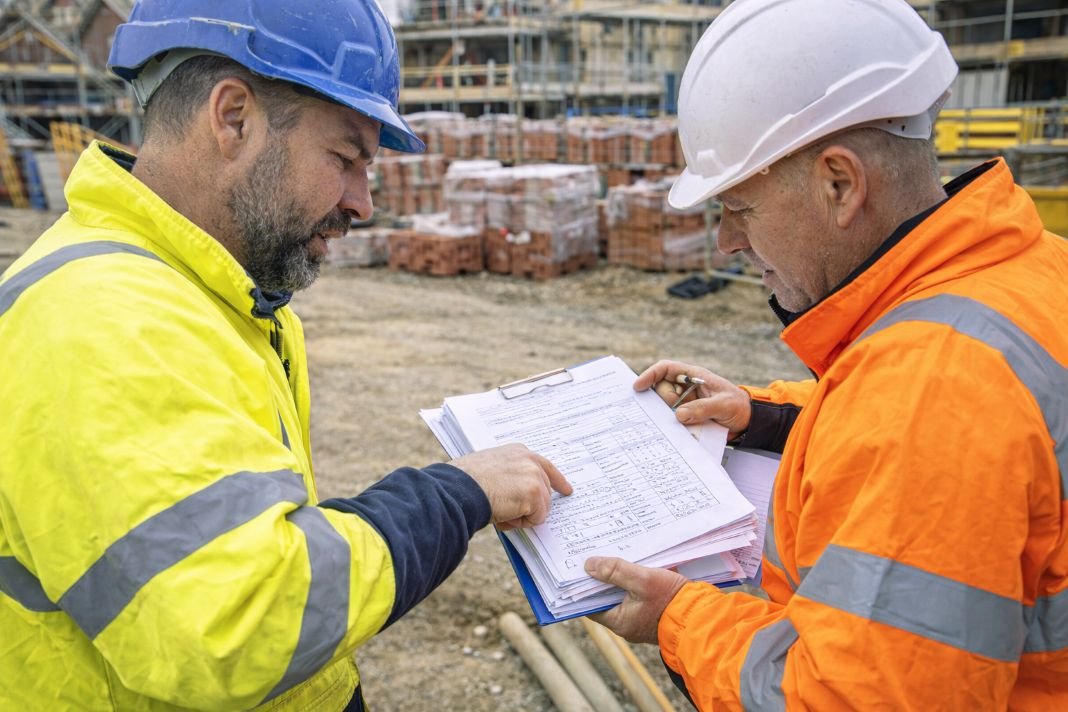
AI photo of construction workers reviewing site documents
Pro Tip 2: Involve your supervisor early to secure timely witness statements and documentation that strengthen your assessment case.
Comparing on site NVQ assessment to college-based routes
Both routes can lead to recognised qualifications, but they suit different people.
A college-based route is often better for newcomers who still need training, guided practice, and broader theory before working independently. On-site NVQ assessment is generally better for workers who already perform the role and need that competence formally assessed.
Cost can differ too. Construction NVQ pricing is usually linked to the qualification level. Current prices include £650 for many Level 2 NVQs, £980 for Level 3, £1,190 for Level 4, £1,500 for Level 6, and £2,100 for Level 7. A college route may involve tuition, attendance time, and practical training that an experienced worker may no longer need.
Time commitment works differently as well. College attendance requires scheduled sessions, whereas a workplace assessment route fits around live jobs. That flexibility appeals to tradespeople who cannot lose working days easily.
Value should not be judged by where the learning happens. The important issue is whether the qualification matches your experience and the outcome you need, such as card eligibility, promotion, or progression into a higher role. A seasoned occupational supervisor and a new entrant electrician do not need the same training route, even if both are aiming for recognised qualifications.

AI image of construction workers reviewing plans at site
What evidence and support are needed for on site NVQ assessment?
Evidence is the backbone of an on-site NVQ. The assessor needs proof that you can carry out the work consistently and safely in real conditions.
Common evidence types include:
- Photos of work in progress and completed tasks
- Site documents, such as job sheets, drawings, permits, or inspection records
- Witness statements from supervisors or managers
- Observation records from assessor visits
- Professional discussions that explain how and why you work in a certain way
Quality matters more than volume. Fifty random photos do less for your portfolio than a smaller set of clear, well-matched evidence linked to the right units. A good assessor will help you focus on relevance instead of collecting everything in sight.
Support usually includes guidance on what to gather, how to present it, and which site activities are worth recording. If you are unsure whether a document is useful, the assessor can advise before you waste time uploading material that does not match the standard. That practical direction often makes the process feel far more manageable.
One common mistake is waiting too long to capture evidence. If a major job stage is complete before photos, records, or observations are collected, you may need to wait for a similar task to come around again.
What does on site NVQ assessment lead to?
The main outcome is a recognised qualification that reflects your actual work. For many people, that opens doors that informal experience alone does not.
An NVQ can support applications for the appropriate CSCS Card, depending on the level and occupation. A trade NVQ at Level 2 often links to the blue skilled worker card, supervisory qualifications can support gold cards, and management NVQs may support black card applications. CSCS requirements can vary by employer and contract, so the exact route should always match the role.
Career progression is another clear benefit. A worker with practical experience but no paperwork may struggle to move into better-paid work, secure site access on certain projects, or step into supervision. Once the qualification is in place, those barriers can become easier to address.
Higher-level study is also possible. Someone who starts with a trade NVQ may later move into Occupational Work Supervision, Construction Site Supervision, or Construction Site Management as responsibilities increase. In electrical careers, different qualifications may support progress toward JIB recognition, inspection and testing work, or compliance-focused roles linked to current standards such as the 18th Edition.
Formal recognition changes how your experience is seen on paper, especially where tenders, compliance checks, and card schemes play a part in hiring decisions.
Start Your On Site NVQ Application
Begin your journey to a recognised qualification conveniently around your current job.
Common misconceptions and mistakes about on site NVQ assessment
Several myths still cause confusion.
Some people assume that a qualification only counts if it comes from classroom study. In practice, an NVQ is specifically built to assess occupational competence in the workplace, so on-site assessment is fully aligned with how the qualification is intended to work.
Others think a fast-track NVQ means little effort. Speed depends on existing experience and evidence readiness, but the standard does not change. If the evidence is weak or the work role does not match the qualification, the process will slow down.
Another frequent mistake is starting the process without enough workplace access. An on-site NVQ needs live tasks that match the units. If your role is too limited, or if you are between jobs, it may be hard to gather the right evidence at the right time.
Many workers also underestimate the importance of current documentation. Photos alone rarely tell the full story. Risk awareness, method, sequencing, communication, and responsibility often need to be shown through records and professional discussion.
A final problem is silence. If a learner is unsure about evidence, unit wording, or the level chosen, early clarification is far better than guessing and building a portfolio around the wrong material. A missed observation on a live lift operation, a rendering stage, or a cladding installation can mean waiting for the next suitable job.
The UK construction landscape: why on site NVQ assessment matters now
The case for workplace qualification is stronger than it has been for years. Construction still needs skilled people across trades, supervision, and management, and the industry continues to face well-documented labour shortages.
CITB has pointed to the need for substantial workforce growth over the next few years. At the same time, site access and contract expectations often place more weight on formal proof of competence, including the right CSCS card route for the role.
Electrical work sits in a similar position. Demand linked to housing, maintenance, renewable energy, and EV charging is increasing the need for qualified workers with up-to-date knowledge. That includes recognised routes through City & Guilds and EAL qualifications for those in the electrical sector.
For experienced site workers, this creates an important shift. Employers may already trust your ability, but major projects, procurement checks, and progression into better roles often rely on documented qualifications as well as reputation. A plasterer with ten years on site and no NVQ may be highly capable, yet still miss out where a formal certificate is expected.
What to prepare before starting your on site NVQ
A little preparation makes the process smoother and more productive.
- Confirm that your current job role matches the NVQ you plan to take.
- Make sure you have regular access to live site work that covers the required units.
- Be ready to gather evidence as work happens, including photos and site documents.
- Let your employer or supervisor know that assessor visits or witness statements may be needed.
- Set aside time each week to upload evidence and respond to feedback.
- Read the assessment plan carefully so you understand what will be assessed.
- Check that your goal is clear, whether that is a CSCS card application, promotion, or formal recognition of existing skills.
Rethinking the route: why on site NVQ assessment is changing the way tradespeople qualify
Workplace assessment reflects a simple idea. If competence is shown on real jobs, then qualification does not always need to begin in a classroom.
That shift matters for adults who are already earning, supporting families, and building careers on site. Flexible qualification routes recognise that learning often happens through doing, repetition, responsibility, and supervision over time.
Construction and electrical work are both moving further in the direction of documented competence. As standards, card requirements, and client expectations continue to shape hiring decisions, on-site NVQ assessment gives experienced workers a practical way to align their record with the job they already do.
For many tradespeople, the question is no longer whether college is the only route. The more useful question is whether their current role gives them the evidence to turn day-to-day skill into a qualification that stands up wherever their next opportunity appears.