What is the 2357 NVQ and why does it matter for a Gold Card?
The City & Guilds 2357 is a Level 3 NVQ Diploma in Electrotechnical Technology. It proves that an electrician can carry out real installation work safely and competently in the workplace, which is why it forms part of the usual route to a JIB Gold Card. For many electricians, it is the qualification that turns practical experience into recognised industry status.
Here's What We Have Covered In This Article
The 2357 NVQ Explained: What It Is and Who It’s For
The 2357 NVQ is a work-based electrical qualification. NVQ stands for National Vocational Qualification, which means that assessment is based on evidence from real jobs rather than classroom exams alone. In simple terms, it measures workplace competence in electrical installation.
Many people first come across the code and assume it is a standalone classroom course. That is where confusion starts. The 2357 sits within a broader training route and is usually linked to apprentices or learners who are building full occupational competence as electricians.
A quick comparison helps:
- 2357 usually refers to the work-based NVQ route in electrotechnical technology, with on-site assessment and a portfolio of evidence.
- 2366 is a technical qualification for people entering the trade and building core knowledge and practical skills.
- 2346 is the Experienced Worker Qualification route for those who have been working in the trade for years but do not yet hold the recognised qualification needed for JIB grading.
Early-career electricians often take the 2357 as part of an apprenticeship pathway. Site-based learners who are already employed may also complete it while working. Some adults moving into the trade begin with technical study, then progress into the workplace evidence required for the NVQ.
One common misunderstanding is that an NVQ is simply a folder of paperwork. In reality, the paperwork is only the record. The real focus is the work itself, including installation tasks, safe isolation, inspection, testing, fault finding, and day-to-day practice on site.
City & Guilds qualifications are widely recognised across the UK electrical sector, and the 2357 has become a familiar benchmark for electricians who want formal proof of what they can do.
Pro Tip 1: Confirm with your chosen provider that the assessment process fits your work environment and job role before you start your 2357 NVQ.
Why the 2357 NVQ Is Important for the Gold Card
The JIB Gold Card is one of the clearest signs that an electrician has reached the recognised industry standard for grading. On many commercial projects, it is treated as the expected site card for a qualified electrician.
Readers often mix up the Gold Card with a general CSCS Card. The CSCS system covers construction occupations, whereas the JIB Gold Card is specific to electricians and linked to electrotechnical grading. That distinction matters on site, where card requirements can depend on the role, employer, and contract.
A few myths come up again and again.
Myth one: years on the tools are enough on their own. Experience matters, but JIB grading is based on recognised qualifications as well as practical competence.
Myth two: any electrical course leads to a Gold Card. Short courses such as the 18th Edition are useful, but they do not replace the full occupational route.
Myth three: the Gold Card is only about access. Site access is part of the picture, yet the card also supports grading, employability, and progression into better paid or more responsible work.
For electricians aiming at approved status, the 2357 NVQ is a key part of the route because it demonstrates occupational competence in a way that employers, contractors, and industry bodies understand. A worker may be capable and experienced, but without the recognised qualification, proving that competence can become much harder when grading or job opportunities are on the line.
MOS Training Centre delivers electrical qualifications that fit this wider progression, including the NVQ route that supports electricians working toward recognised industry standing.
Pro Tip 2: Collect workplace evidence steadily throughout your projects to avoid gaps and last-minute rush when building your NVQ portfolio.
How the 2357 NVQ Is Achieved: Course Content, Assessment, and Duration
The 2357 is achieved through workplace assessment, evidence gathering, and review by an assessor. Learners are judged on what they do in genuine working conditions, so the process is practical from start to finish.
A typical process looks like this:
- The learner starts in an employed electrical role where they can carry out relevant installation work.
- An assessor reviews the job role and explains the units, evidence requirements, and portfolio structure.
- Workplace evidence is collected over time, including job records, photos, site documents, observations, and witness testimonies.
- The assessor checks competence against the qualification standards and identifies any gaps that still need to be covered.
- Once the portfolio is complete and all requirements are met, the qualification can be claimed.
Evidence usually comes from real electrical installation tasks. That may include containment, wiring systems, termination, inspection, testing, fault diagnosis, and safe working practices. Assessors also look at how the learner follows regulations, works with others on site, and maintains proper documentation.
Duration varies because the NVQ depends on access to suitable work. Someone in a busy installation role with a good spread of evidence may move through the process more smoothly than a learner whose job is narrow or repetitive. The qualification is therefore flexible in timing, but it is never instant.
People often ask what evidence is actually needed. Common examples include site visit observations, completed job sheets, photographs of work, risk assessments or method statements where relevant, witness statements from supervisors, and records linked to inspection or testing activity. Strong portfolios are usually built steadily, job by job, rather than rushed at the last minute.
That practical structure is one reason the qualification carries weight. It is based on what the electrician can show in the workplace, not on what they can describe in theory alone.
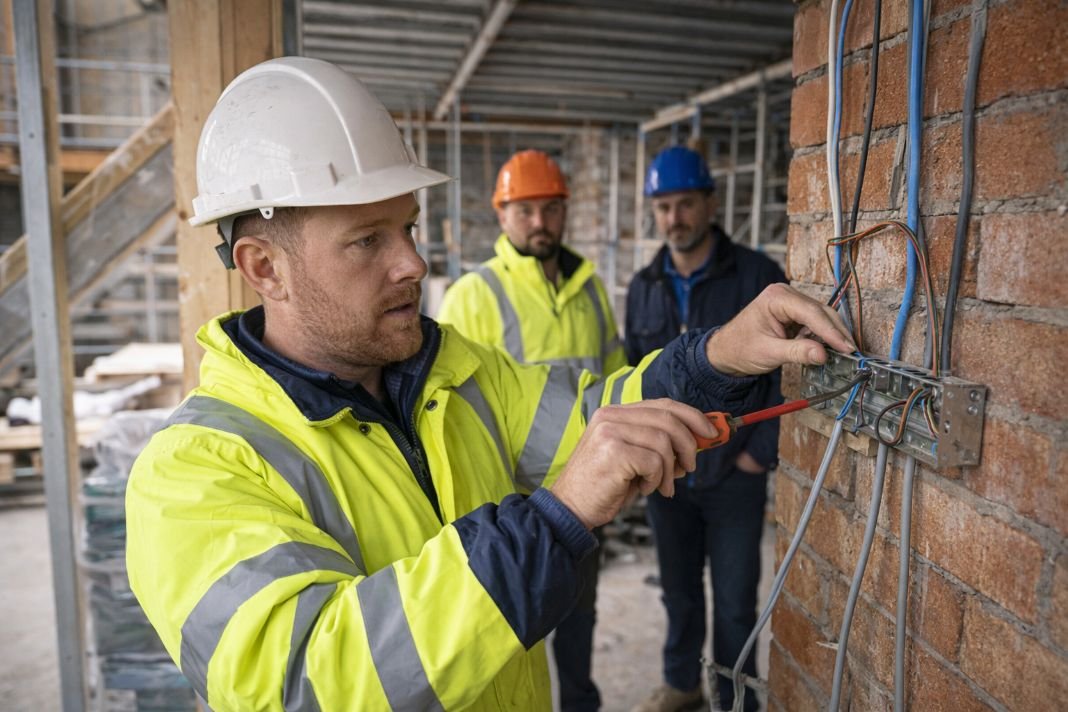
AI image of electrician on-site
Comparing the 2357 NVQ to Other Electrical Qualifications
Electrical training routes can look similar on paper, yet they serve different types of learner. Choosing the wrong one can cost time and money, so it helps to separate them clearly.
Here is the simplest way to view the main routes:
- Choose 2357 if you are training and working in the trade, usually through an apprenticeship or employed pathway that allows full workplace assessment.
- Choose 2346 if you are already an experienced electrician without the recognised qualification and need the Experienced Worker route.
- Choose 2366 if you are entering the trade and need technical training before moving into the workplace stage required for occupational competence.
The 2357 and 2346 both connect closely to recognised electrician status, but they are aimed at different backgrounds. The 2357 suits learners building their career through the standard vocational route. The 2346 is aimed at those who can already demonstrate substantial industry experience.
By contrast, the 2366 is about underpinning knowledge and practical training. It is useful for new entrants, career changers, or adults who need a route into the trade, but on its own it is not the same as proving full workplace competence as an electrician.
A simple scenario shows the difference. A school leaver employed by an electrical contractor may work through the 2357 route. An electrician who has spent years installing and testing but never completed the formal qualification may fit the 2346. An adult changing careers with no site history may start with 2366 before moving on to the work-based stage.
Gold Card aims often shape the decision. If that is the target, the route has to match both the person’s experience and the industry requirements attached to recognised grading.
Costs, Funding, and Value: What to Expect with the 2357 NVQ
At MOS Training Centre, the City & Guilds 2357 is priced at £1,600. That figure gives electricians a useful benchmark when comparing routes and planning their training budget.
Cost matters, but context matters just as much. A recognised electrician NVQ can affect access to work, grading, and progression, so the fee should be weighed against the role it plays in a long-term career.
Employer support is sometimes available, especially where a company wants to formalise the skills of its workforce or meet contract expectations. Some learners pay privately, while others share the cost with an employer. Funding arrangements vary, so the practical point is to check early rather than assume support will appear later.
Cheaper options can look attractive at first glance. Short update courses, regulation courses, or standalone technical qualifications have their place, but they do not replace the work-based evidence route where full occupational competence is required. Paying less for the wrong qualification can end up costing more if the learner then has to retrace their steps.
For electricians who need recognised status for grading or site work, the value of the 2357 is tied to what it unlocks in the labour market, including wider job access and a clearer route to the Gold Card.
Common Pitfalls and Misconceptions About the 2357 NVQ
Confusion around electrical qualifications is common, especially for adults returning to study or workers who have been in the trade for years without formal paperwork. Most delays happen because someone starts with the wrong assumption.
The main pitfalls are straightforward:
- Assuming experience alone will secure a Gold Card.
- Underestimating how much evidence is needed for the NVQ portfolio.
- Confusing the 2357 with the 2346 or 2366.
- Expecting the qualification to be completed without suitable on-site work.
- Treating all assessment support as identical, even though guidance and organisation can vary between providers.
One of the biggest issues is evidence quality. A learner may be doing the job well every day, yet still struggle if they do not record work properly or fail to gather proof as projects progress. Leaving everything until the end usually creates avoidable pressure.
Another problem comes from route selection. An experienced worker may be better suited to the 2346 route, whereas someone still building workplace competence may need the 2357 pathway. Mixing those up can slow progress before assessment has properly begun.
Most of these problems can be avoided with good advice at the start, a realistic view of the evidence required, and a clear understanding of which qualification matches the electrician’s actual background.
Speak to an Advisor About Gold Card Routes
Connect with our team for clear advice on how the 2357 NVQ fits your career goals and Gold Card requirements.
The 2357 NVQ in the UK Electrical Industry
The UK electrical sector continues to need qualified people, and that demand sits inside a wider construction skills gap. Industry forecasts regularly point to the need for more electricians in the years ahead, especially as building services, infrastructure, renewables, and EV charging work continue to grow.
Formal qualifications are becoming more significant because employers want proof of competence they can verify. On a busy project, a recognised route such as the City & Guilds 2357 gives structure to that proof. It also supports consistency when firms are recruiting, grading staff, or deciding who can take on more responsibility.
New areas of work are shaping expectations too. Electricians moving into inspection, testing, energy-related installations, or modern building systems often need current qualifications as well as practical ability. The trade still rewards experience, yet the strongest position usually comes when experience is backed by recognised evidence.
That is why the 2357 matters beyond the paperwork. It sits at the point where day-to-day site work, professional recognition, and future employability meet, which leaves electricians in a stronger position as the industry keeps raising its standards.