Where should you begin if you want to change career and become an electrician?
Start by matching your current experience to the right training route, then choose a recognised qualification that fits your goal. Most career changers in the UK begin with an entry-level electrical course, then move into practical training and, later, an NVQ or experienced worker route once they are working in the trade.
- Check whether you are starting with no experience, related site experience, or previous electrical work.
- Compare recognised routes such as City & Guilds, EAL, and NVQ pathways.
- Work out how you will fit study, practical training, and fees around your job or family life.
- Confirm what the qualification actually leads to, including site access, further training, or JIB grading.
A full career change into electrical work takes planning, but the first step is usually simpler than people expect. You need a realistic route, a clear timescale, and a proper understanding of what employers look for.
Here's What We Have Covered In This Article
Who This Pathway Is For: Identifying Your Starting Point
Plenty of people look at electrical training and assume they have missed their chance. That is rarely the case. Age, previous job title, and academic background do not decide whether you can move into the trade, but they do affect where you begin.
Someone coming from retail, driving, warehouse work, office administration, or hospitality will usually need a true beginner route. That often means starting with a technical course that teaches core electrical principles, safe working practices, installation methods, and inspection basics.
A worker from another trade may have a different starting point. If you already work on sites as a labourer, dryliner, plumber, improver, mate, or maintenance operative, you may already understand site safety, tools, drawings, and work routines. That does not make you an electrician, but it can make the transition feel less unfamiliar.
Experienced electrical workers form another group entirely. Some people have spent years doing electrical work without the full qualification set needed for an NVQ, a Construction Skills Certification Scheme card, often called a CSCS card, or Joint Industry Board grading, usually shortened to JIB. In that case, the route is often about proving existing competence through the right assessment pathway.
Mature learners often worry about going back into training. Employers and training providers are used to career changers, and many electrical courses are structured for adults who are balancing work and family commitments.
Previous qualifications can help, but they are not always the deciding factor. Practical ability, consistent attendance, safe working habits, and a willingness to study technical material matter just as much once training begins.
Pro Tip 1: Map out study time and exam dates alongside your current commitments to avoid last-minute stress.
Comparing Your Training Options: City & Guilds, EAL, and NVQ Routes
The main routes can look confusing at first because they do different jobs. Some qualifications are aimed at beginners. Others are for people already doing electrical work. An NVQ, or National Vocational Qualification, is based on workplace evidence of competence rather than classroom learning alone.
Here is the simplest way to look at the main options:
- City & Guilds entry route: suited to beginners who need technical knowledge and practical training before moving into workplace assessment.
- EAL specialist route: often used for additional electrical qualifications such as Building Regulations for Electrical Installations in Dwellings or PAT Testing.
- NVQ route: suited to people already carrying out electrical tasks on the job and able to gather evidence from real site work.
- Experienced Worker Qualification route: aimed at workers with substantial electrical experience who need to convert that experience into a recognised Level 3 outcome.
A beginner with no trade background will usually need a technical qualification first. One common example is the City & Guilds Level 3 Technical Occupational Entry in Electrical Installations, known as 2366-03. That route focuses on core knowledge and practical skills needed before workplace assessment.
By contrast, the City & Guilds Level 3 NVQ Diploma in Electrotechnical Technology, known as 2357, is linked to competence in real working conditions. You do not usually start there unless you are already in a suitable electrical role.
For experienced workers, the City & Guilds Electrotechnical Experienced Worker Qualification, 2346-03, can be relevant. That route is not a shortcut for beginners. It is intended for people who have been working in the industry and need formal recognition of their competence.
The 18th Edition, officially BS 7671:2018, is another common point of confusion. It is an important wiring regulations qualification, but it does not turn a newcomer into a qualified electrician on its own. Think of it as one piece of the wider picture.
MOS Training Centre delivers City & Guilds and EAL electrical qualifications from its Loughton, Essex training centre, which suits learners in London and the surrounding area who need in-person exams and assessments. The right route depends less on brand preference and more on your current level of experience.
Pro Tip 2: Check whether your existing skills or experience can shorten your qualification timeline before enrolling in a course.
What to Expect: Course Content, Assessment, and Duration
Electrical training combines theory, practical work, and assessment. Even if you are good with tools, you will still need to study topics such as circuits, safe isolation, inspection routines, installation methods, and regulations.
A beginner course usually includes classroom-based learning and practical tasks. You may be assessed through written exams, online tests, practical assessments, and set assignments. The exact format depends on the qualification and awarding body.
Once you move onto an NVQ route, assessment changes. Instead of learning everything in a centre, you build a portfolio from work you carry out on site. An assessor reviews evidence such as job records, photographs, observations, and supporting documents to confirm competence against the qualification standards.
Course length varies by route and by your weekly availability. Someone studying around full-time work will usually take longer than someone able to train more intensively. A technical entry qualification may take many months, whereas a short regulations course such as the 18th Edition is much shorter.
If you are trying to balance training with work, family, or a current job outside the trade, keep these practical points in mind:
- Set aside weekly study time before you enrol.
- Budget for exam days, travel, and course fees as well as tuition.
- Plan how you will gain real electrical experience if your long-term route includes an NVQ.
A lot of career changers expect the practical side to be the main challenge. In reality, many find the written work, regulations, and consistency of revision need just as much attention, especially after time away from formal study.
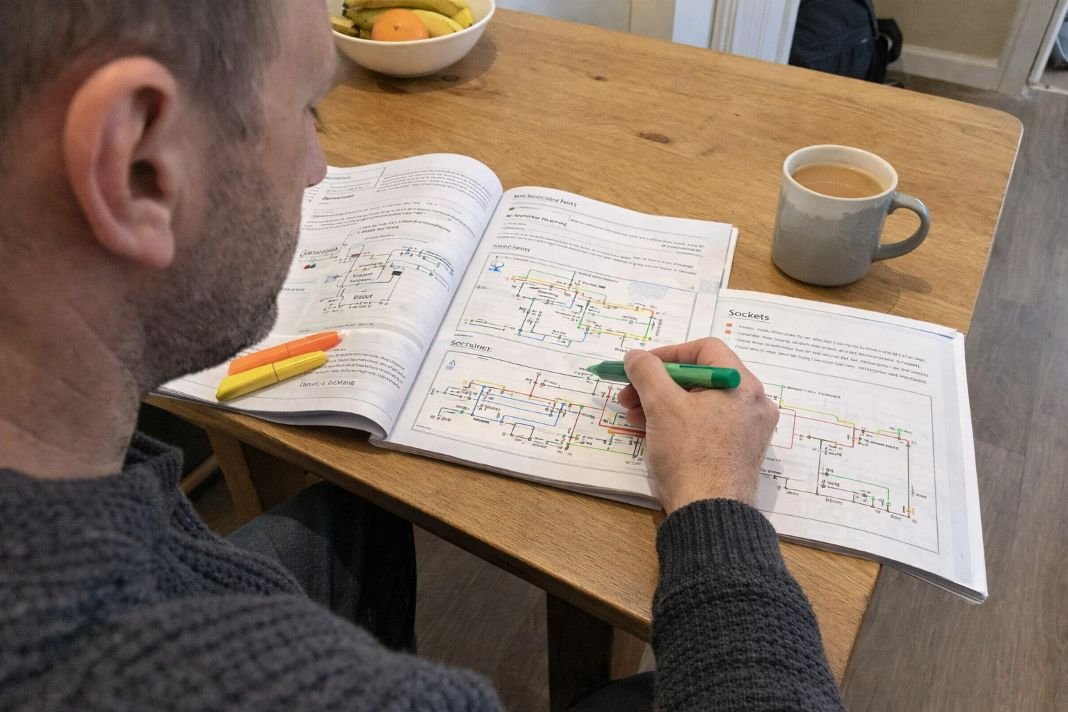
AI image of electrician learning
Outcomes: What Qualifications Lead To in the Electrical Industry
Qualifications matter because they connect training to real work. Employers, contractors, and card schemes usually want evidence that your skills match the level of work you are doing.
An entry-level technical qualification can help you move into trainee roles, electrical mate positions, or improver work where you can build experience. It shows that you have started formal training, but it is usually one stage in a wider process rather than the final destination.
A Level 3 NVQ in Electrotechnical Technology carries more weight because it shows competence in the workplace. That can support access to recognised industry grading and can be relevant if you are working toward JIB recognition, depending on the wider requirements attached to your route.
The 18th Edition supports work that needs current knowledge of wiring regulations. Employers often expect it, especially in installation roles, but they will still look at your practical competence and broader qualification history.
Inspection and testing, often referred to as 2391, can support progression for electricians who are moving into more advanced testing responsibilities. It is generally taken after a solid grounding in installation work rather than at the very start of a career change.
In practical terms, the pathway often looks like this:
- Beginner training
- Entry into supervised electrical work
- Workplace experience
- NVQ or experienced worker assessment
- Further qualifications such as 18th Edition or inspection and testing where relevant
CSCS card rules can vary by employer and contract, and electrical grading routes can also depend on the exact qualification mix you hold. For that reason, readers should treat card eligibility as something to check against their intended role, not as a fixed one-size-fits-all rule. A domestic installer, a site-based electrician, and a testing specialist may all need slightly different evidence.
Common Mistakes and Misconceptions When Changing Career to Become an Electrician
Career changers often lose time by choosing a route that sounds quick instead of one that matches their background. Electrical training is a trade pathway with formal standards, so the details matter.
One common mistake is assuming that a short course alone will make you fully qualified. Short courses can be useful, particularly for regulations or specialist updates, but a newcomer usually needs a broader sequence of training and workplace experience.
Another problem comes from misunderstanding the NVQ. People sometimes think it is a classroom course for beginners. It is not. The NVQ is based on real job evidence, which means you need access to suitable electrical work.
Some learners also underestimate the academic side. Maths, fault finding logic, written exams, and regulation-based questions can feel unfamiliar if you have been away from study for years. That does not mean the route is closed to you, although it does mean revision has to become part of your weekly routine.
Card schemes create confusion as well. A CSCS card is not the same as being fully qualified as an electrician, and JIB grading follows its own standards. Mixing those up can lead to poor course decisions.
Fast-track routes are another area where expectations need care. A route aimed at experienced workers can be efficient if you already do the work every day. For a complete beginner, the same route will usually be unsuitable and frustrating.
Book a Centre Visit
Arrange a visit to our Loughton training centre to see facilities and discuss course options in person.
The UK Industry Context: Demand, Skills Shortages, and Regulation
Electrical work sits inside a large UK construction and building services market that continues to need trained people. Industry bodies have pointed to ongoing labour pressure across construction, and electrical roles remain part of that picture.
CITB has highlighted workforce demand across the wider construction sector, and electrician shortages are often discussed alongside housing, infrastructure, retrofit, and maintenance needs. For someone changing career, that matters because demand supports opportunity, but only for workers who can show recognised competence.
Regulation also shapes the route. Employers increasingly want formal qualifications, up-to-date wiring regulations knowledge, and proof of safe practice. Site access requirements have tightened in many settings, which means informal experience without recognised training carries less weight than it once did.
Renewable energy, EV charging, and energy-efficiency work have added new areas of demand. Those areas still require core electrical competence first. A person who wants to work in newer sectors usually needs the same strong base in installation, inspection, and regulations before moving into specialist work.
Viewed together, these trends point in one direction: electrical work remains a good long-term trade choice for people willing to train properly and keep their knowledge current as standards change.
Preparing to Enrol: What You’ll Need and How to Get Ready
Good preparation makes enrolment simpler and helps you choose the right course first time. Before you commit to training, get the practical basics in order.
- Confirm your starting point. Write down any site experience, electrical exposure, previous qualifications, and current job role.
- Gather basic documents. Proof of identity, address details, and any existing certificates are commonly needed.
- Check the course structure. Look at attendance requirements, exam format, and whether the qualification is centre-based or work-based.
- Budget properly. As a guide, the City & Guilds 18th Edition course is priced at £392, the 2391-52 Inspection and Testing course at £1,200, the 2357 NVQ at £1,600, the Experienced Worker Qualification 2346-03 at £1,600, and the 2366-03 technical entry route at £2,560.
- Plan your timetable. Decide where study hours will sit each week before lessons start.
- Think ahead about work experience. If you are starting from scratch, you will need a route into real electrical work at the point where workplace evidence becomes necessary.
MOS Training Centre in Loughton, Essex runs electrical courses and assessments for learners who need a London-accessible training centre, including City & Guilds and EAL qualifications. If you are comparing providers, focus on awarding body recognition, assessment format, location, and whether the route genuinely fits your current experience.
Looking Ahead: What Most New Electricians Wish They’d Known
Many new entrants expect a straight line from enrolment to qualification, but the trade usually develops in stages. Skills build over time, confidence comes from repetition, and technical knowledge starts to make more sense once you see it in real jobs.
Patience matters more than people think. Someone changing career may feel pressure to catch up quickly, especially if they have taken a pay cut or returned to study later in life. Steady progress usually serves you better than chasing the fastest-sounding route.
New electricians also tend to wish they had paid earlier attention to the wider picture of the job. Good communication, neat paperwork, punctuality, and safe habits all carry weight alongside installation ability. Employers notice the person who can follow a method, record their work properly, and turn up ready.
Peer support helps too. Talking to qualified electricians, supervisors, and assessors can give you a more accurate view of what each stage involves, from technical training to NVQ evidence and JIB-related progression.
The trade keeps moving, so learning does not stop once the first qualification is complete. Regulations change, equipment changes, and the kinds of projects available can shift with housing, infrastructure, and energy policy. A strong start comes from choosing the right entry point, then building your career one recognised step at a time.